Underland arcana 1, p.1
Underland Arcana 1, page 1


UNDERLAND
ARCANA
- 01 -
Winter 2021
Underland Press
Contents
At the Heart of the River
~ Jessie Kwak
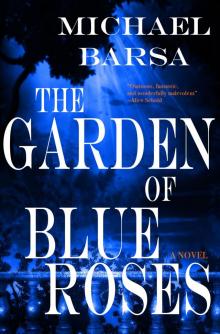
The Gardener
~ Michael Barsa
Landfall
~ Stephen O’Donnell
The Continuing (Superpositional) Adventures of Schrödinger’s Cat
~ David Hewitt
A Pamphlet Found Among Broken Glass Near the East Wing Entrance
~ Jonathan Raab
Conferring With Ghosts Between the Hours of Three and Four-Forty-Five in the Morning
~ Elou Carroll
Selfies
~ Nina Kiriki Hoffman
Vieux Carré
~ Rebecca Ruvinsky
Seahorses and Other Gifts
~ Tristan Morris
Contributor Bios
At the Heart of the River
~ Jessie Kwak
I have always loved you.
When you were a little boy, skipping stones across my broad back and plucking fat, splashing tadpoles from my shallows, I clung to you every time you left my banks. I was in the black dirt beneath your nails and the dank reek your mother would yell at you to wash off before dinner. Sometimes I would splash a daub of mud behind your ear and it would stay hidden there for days, weeks. Until you came back to me to play once again.
When you ran to me after your father came home drunk and vengeful, I saw you cry for the first time. The salt stung but I lapped your tears like they were the first fall rains when you heard him calling for you and sat up, stricken, splashing handfuls of me onto your face to hide your crying.
When you first brought her, I eddied and churned as you both slipped naked into me, tasting you both as you tasted each other. I decided quickly I didn't much care for her girlish giggle or the way she squealed in disgust when her toes squelched into the same black silk you'd smoothed over your boyish face as pretend camouflage years ago. I also didn't care for the bitter, toxic-tasting cologne you'd worn for her. I drew up icy currents from the deepest places in my heart until she shrieked, shivering, and begged you to go back to the shore. There, you drank cheap, sweet wine and made love for the first time on a blanket while I sulked and swept the bad taste farther downstream.
When you proposed, years later, you told her how much it meant to return to the place you first loved. She assumed where you first made love, but I knew the truth. I am the place you first loved. You tried to get down on a knee, but, no, it's too dirty, she said. She pulled you back up into her arms, but I seep into the soil, too, and I shifted beneath you both, just enough to make you lose your balance and step back with a yelp to splash your shoe into my shallows. You pulled her down with you and she caught her hand on a sharp rock. Her sun tan lotion smothered me in a greasy sheen, and the acrid metal you've put on her finger disgusted me. But I have a weakness for the taste of blood and I sucked at her hand greedily, pushed as much of myself into her wound as I could. You were laughing but she was angry, calling you clumsy, clutching her injured hand. Black silt and red blood dripped off her elbow into my lapping waves and I drank them both.
I have always loved you. And I still love you now, when you're fresh from her funeral in Sunday black. I'm sorry, my love. Although I won't lie and say I'm sad she's gone, you must believe me that this wasn't my intention. Infections simply have a way of spreading, and my silt is rich and alive.
I love you as you pick up rocks from my bank, examining them just as you did when you were a boy, looking for that perfectly shaped stone to skip across my back. I leap with joy that you might do so again—but, no. You're not looking for a smooth skipping stone, you're looking for a jagged one, like the one that tore her hand. Ah. I see.
You find one and cock your arm back to throw, and I will take your rocks hurled in anger just as happily as your rocks skipped in idle joy.
But you don't throw it.
You slip it into your pocket, instead; its jagged bulk juts against the fabric of your dress trousers. You pick up another stone, directly from my shallows, with no care this time for the stone's shape. Into your pocket it goes, a damp stain spreading out from your pocket.
You find another, another, reaching farther into my current, no heed paid to the state of your clothes or shoes as you wade in to fill your suit pockets with my stones. You fall to your knees and do not notice the pain, you bend back a fingernail and I taste blood; it's sweet, my love.
Now I'm too deep for you to crawl and you're walking, wading farther into me than you've ever gone, past the sun-warm swimming hole you built one teenaged summer and into the swift current at my heart.
Isn't it beautiful, the way the sunlight breaks the surface of the water and ripples in my currents? I lap kisses into your ears and nose, but your steps hesitate, hands clawing at your pockets.
Isn't it stunning, the way the schools of little silver minnows shatter like glass when you rush through, fingers pulling stones out of pockets to tumble downstream—I'll make them smooth, eventually.
Your mouth opens for breath and I fill you. Your arms windmill to swim and I dance with you, swirling us both as I've wanted to do all these years, tumbling us until you're dizzy.
Doesn't it move you, how lonely cold-cold-cold I am at my heart?
You seem tired of dancing, so I shift an ancient, slime-slick stone beneath your foot; your foot slips beneath and I hold you tight.
There's so much I've wanted to show you.
The Gardener
~ Michael Barsa
Behold the famous horror writer: pale, thin, disheveled, hunched over the greasy steering wheel and driving much too fast. His wife sits next to him. Usually she is the competent one, the one who drives, but not tonight. Tonight he has insisted. Snow whips through the headlight beams. The flakes are thick and frenzied, a snow globe shaken by a lunatic. He can just see where the road disappears around a bend. A ravine hugs the bend—a frown of ragged rock-teeth—and because they're in the country there is no barrier, only a skirt of gravel and a sign showing a truck tilting off a cliff.
His wife shifts in her seat, stirred from her usual boredom. "John," she says, training her huge gilt-framed sunglasses on him. Those sunglasses are like machinery, like a retractable roof, except they never retract: she wears them at all hours. Even so he can tell what she's thinking: that he's driving like this to prove a point. That he, as an author, believes he can do anything—defy the laws of gravity, of velocity and friction and the lubricity of ice. That he'd only have to utter the word fly and he could make it so.
She is right. But it is no game. The sign whips past. He makes a halfhearted attempt to turn the wheel.
They fly.
It takes him a moment to realize they've left the road, left solid ground itself. He feels it in his stomach first—a suspension, a disbelief. The engine howls like an over-eager cowboy; his seat falls away. It really does feel like flying. Yet he knows that's . . . what? He searches for the word. An illusion. A farce. Just like everything else he's ever done. Sure, he's been a celebrated "novelist." He's been awarded Bram Stokers and Silver Daggers, interviews with Katie Couric and Charlie Rose. But in truth? He's a glorified hack.
"John?"
He turns the wheel easily now. It's like a toy, one that tilts and creaks and makes funny sounds if you press the right buttons. Look at me! Whee! Just then he notices a woman on the hood. At least I'm not her, he thinks. Then his mind backs up. Wait. There's a woman on the hood. It's true, she's sliding around, trying to hold on, and only after a few seconds does he see the bleeding stumps where her hands ought to be and her ruined mouth forming blood-bubble words: Why? Why did you do this to me?
Am I already dead? he wonders. No. It's just a hallucination. He blinks her away. Still he has a creeping suspicion he knows her. Then it comes to him. Her name was—is—and always will be—Valerie. She's the first victim from his very first novel, the one he cried over as if she were real, having to remind himself she was just words on the page as he carved and delineated and punctuated her poor imaginary flesh. What does she want with him now? What is she telling him? There's something important here, but his mind can't grasp it. Panic is setting in. His hands are bathed in sweat. At any moment he'll be like her: a fiction, a dream. Is she counseling him to finally face his demons, the ones he's buried under mounds of make-believe? The pastiche of lies he calls his past, and what his novels really cost him to write?
Too late now. Snow studs the windshield. Wind whistles through tiny gaps where the windows meet the frame. He sets the wheel straight again, as if not doing this has been his mistake all along. He digs his thumbs into its grooves, telling himself an engineer actually thought of their perfect placement while he himself has only ever caused pain. He thinks of his two children, Milo and Klara, how he's damaged them, used them as characters in his own dark genre. At least this will be their freedom as much as his, a final gift to them.
They fly.
He is light, he is snow, a dangling participle, a story gathering momentum, a narrative's rising arc. He is the God of this Volvo's universe, and like any God he's enamored of the possibility of escape. The moon! He wants to go to the moon. Right there, looming beyond the clouds, a hazy yet somehow proximate place, a lifeless lunar glow. "Almost there," he says out loud. But his wife can't hear. She is laughing. Line s ripple across her rough rouged cheeks. She looks like she does when scolding him, telling him to buck up and be grateful you have a public who adores you. No, not me, he always wanted to say, my books. But even at the time he wasn't sure there was a difference. Now he reaches out to her. It's meant to be a final consolation, a way to say he's sorry. She flinches, pulls away. Because they're not going up anymore. Nor are they landing on a moon-crater. It's the ravine rushing toward them, faster than he thinks possible. He considers the ironic subtleties of grammar: what a difference it makes to transpose a single consonant and make a slight vowel shift.
They fall.
He's a child again. His father has just tossed him high into the air. Only it's not a soft-focus hazy happy kind of toss. His father wears a scowl and a white dress shirt drenched in pee. Johnny has done a VERY NAUGHTY THING and now he's crying because he's just been hurled . . . No. He can change this. Re-write it. He can make his father jaunty and proud, like he ought to have been, can make him happy. Why can't you write something happy instead of those awful horror books?
He writes something happy. About falling into a young girl's arms. A redheaded Irish girl whose name he's long blocked from his mind. If only he can edit away the reason they met and why they had to love in secret, his British Army uniform and the terrible things he did to that girl's brother, which she could never know because then he'd have to . . .
Another flash. He's older now, holding Milo and Klara in his arms, telling himself he has a chance to do things right for a change, to break the cycle. It's a lovely summer's day. In America, the land of forgetting. A gust of wind rises up. Trees sway overhead, curious and dark. But he's keeping the darkness at bay with his proud smile, his loving arms, his bright white shirt and ruffled hair, his picture-perfect pose. Don't move. That's right. Freeze right there. Say cheese. A picture is worth . . . Stop.
The girl, the redhead. Her name was Blanaid. Meaning a flower or blossom.
Stop.
They're in his Army jeep, laughing. He punches the wheel. Suddenly the windshield explodes. He doesn't hear the bomb, but he knows what it must have been. He was so stupid to take her so far beyond the base. Now the jeep is on its side and her head is staved against the bolster and her smile's become a vacant unearthly bliss. Somehow he is alive. He begins to crawl away. There's a trail of blood on the pavement behind him. If only he can get to a phone . . . He stops to catch his breath. Best to slow down, observe what's happening. His blood is becoming absorbed into the ice. When the ice melts it will form a river to feed the hungry soil.
He snaps back to the present. The Volvo is a shattered wreck, a pointillist horror. Glass is everywhere, and he's lying facedown in the dirt, halfway out of the car. Snowflakes kiss his cheeks. Only one eye works. The other oozes down his cheek. Out of the corner of his good eye he glances back up, to the lip of the ravine. He sees headlights. The vague outline of a man peering down. A man with a checkered shirt, work boots, gloves, a shovel —a man he knows as well as his own children, a man who in a sense is his own child, too. Ever since seeing Valerie he's half-expected this. His own personal grim reaper. He's always loved the image of the reaper because that's what death is: the moment we turn from consumer to consumed—the moment we become food. Yet it's cold comfort now. He blinks. The man scuttles down the ice. Impossible with that sheer face, but he makes it look easy. How? he hears an old writing teacher say. You've got to tell the reader how he can do the impossible. But he can't. Suddenly he's scared, confused—this is all too real. Or is it? His brain screams run. He hears the thud of boots. The breathy pause. Just like he used to write it. He sees the shovel rise up like a stave, like an axe against the moon. The wind-whistle. Let it come down. It does. But not into him. Into the ice. Chips fly, glinting through the moon-reflected snow. The man quickly hits dirt. Hard as rock. He pries it loose, then begins tossing dirt onto him, onto the famous horror writer, whose one good eye quickly fills. It doesn't matter. With all the blood seeping in he can't see anyway, and doesn't have to, because he already knows what happens next.
Or so he thinks.
From the other side of the world he hears the man grunting, more soil scuttling across the shovel's blade. But on this side of the world he notices something else. A soft tickle in his ear. The intimate press of worm-flesh. He knows this isn't real, just a premonition of what's to come, yet he's still surprised. The man shovels more dirt on top of him. The writer hears water sloshing in a bucket. Soon it comes trickling between his legs. He's about to die three ways—drowning, suffocating, and bleeding to death—when he finally realizes what's going on.
A memory comes to him, of watching Milo play behind the house, digging with a plastic shovel while he, the writer, watched, as he often did, taking notes on this strange lost boy while half-hidden behind a tree. Milo wore shorts and tall socks with red bands around the top, and he worked with a diligence that some took as a sign of mental slowness. His thin back was bent like a question mark as he dug a perfect rectangle. Then he sat down next to it. He seemed to contemplate his work. He had four wooden dolls laid out on the grass beside him. The dolls wore old-fashioned clothes—a man and small boy in green suits, a woman and girl in frontier-style dresses. Milo picked each one up and whispered something to it before stroking its bristly hair. He then placed them face-down into the hole, side by side, and when he was finished he stood and took up the shovel again and began covering them with dirt.
That's when the writer emerged from behind the tree, notebook still in hand. "What are you doing, Milo?"
The boy didn't look back, just answered as if talking to an idiot: "Gardening."
The word comes back to him now as he pictures where he is, inside this giant ravine, this furrow in the snow. The man with the shovel and checkered shirt works carefully too, and the writer can feel the weight of the dirt atop him getting heavier, even as the water keeps trickling past. He tries to lift a hand. He can't. So he does the opposite, pushing down, his nearly dead weight pressing the snow, and to his surprise it gives way, there's a hole, he's punched clean through. Into what? He's heard glass shatter. He claws the air. He reaches deeper, up to his shoulder, feels the water trickle down his arm and drip from his fingers. He's grasping at something, anything, until he finds a curved plastic rod and pulls, hoping to escape that man yet, to yank himself down and miraculously out of harm's way, so he pulls until the rod rocks back and forth, and then he notices the grooves, which is his first sign that not everything is what it seems. Because it's not a rod at all. It's another steering wheel. There's a car beneath his own. It must have been buried lightly, on its side, at the bottom of the ravine. He lets go of the steering wheel. His arm swings back, into something delicate, something moist and soft and . . . Flowers? This surprises him more than anything he's encountered so far. How can flowers grow below ground? And in winter? For the moment he forgets his own pain, just thrusts his hand deeper into them, into their impossible caress, a last sensuous touch that nearly makes him cry, and that's when he comes upon the tangle of vines beneath the flowers. Trapped in the vines is something else, like a large silky tongue. He tugs. It doesn't come loose, it's wrapped around another thing, and when he slides his hand up it he can just feel the knot around the neck of it, and that's when he shudders, when he knows what this place is.
A garden.
And what his entire life has amounted to—what he's at last become.
A seed.
Landfall
~ Stephen O'Donnell
We were six hours rowin for shore and the current against us the whole time. Near shot from the effort. The bastard wind. And the houses along the shore shootin up smoke, burnin wild. Looked like the shores of hell. And the tanker already aground behind us, threatenin to bust her bows with every wave until finally she went with a less'n a groan in the final swell. We rowed on. The freezin spray and the skin of us windbitten, slaked raw by the brine and that fuckin knifewind. Laong wept when he set foot in that black sand. I near wept mysel. I had already given up, she said. Out there.
The station man nodded, said nothing.
So you'll see now that I hafta. She drained the cold dregs in her mug. She was sat naked and shivering before the muted glowing of the grate.