

Just pursuit, p.1
Just Pursuit, page 1
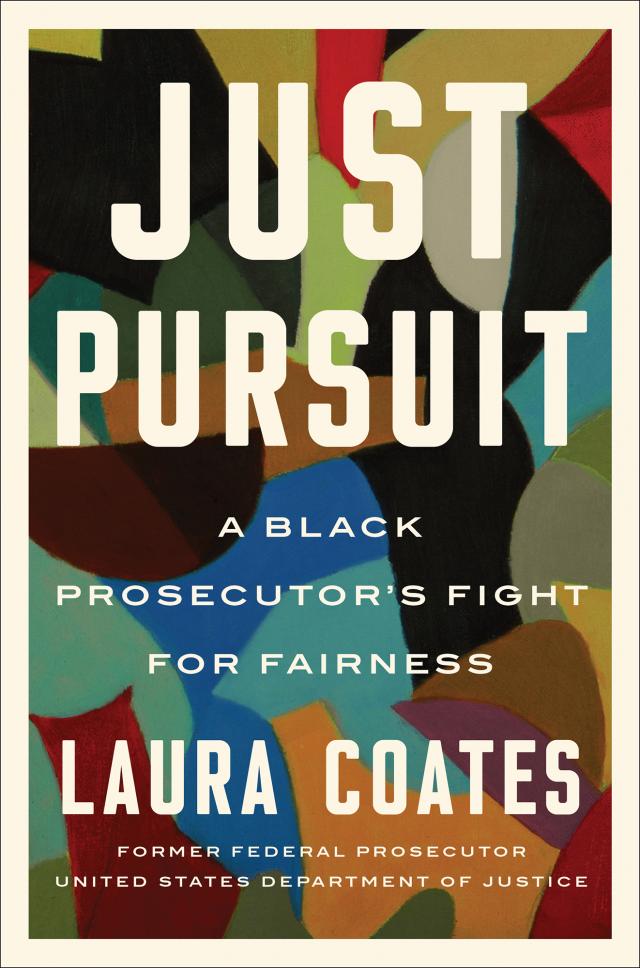


Thank you for downloading this Simon & Schuster ebook.
Get a FREE ebook when you join our mailing list. Plus, get updates on new releases, deals, recommended reads, and more from Simon & Schuster. Click below to sign up and see terms and conditions.
CLICK HERE TO SIGN UP
Already a subscriber? Provide your email again so we can register this ebook and send you more of what you like to read. You will continue to receive exclusive offers in your inbox.
To my children, Adrian and Sydney. If you are never more than you are today, to me you were always enough.
Introduction
The pursuit of justice creates injustice.
Before I became a prosecutor, I never imagined that could be true. I thought that the job would be an uncomplicated act of patriotism and that justice was what happened when a person was fairly tried and convicted for their crime.
For years, I stood inside a courtroom, representing the people of the United States. I witnessed firsthand how our just pursuits caused collateral damage in ways I couldn’t have imagined when I answered my calling to leave private practice as a civil litigator and join the Department of Justice.
My time at Justice began as a trial attorney in its Civil Rights Division. As a child, I knew the stories of Ruby Bridges and the Freedom Riders better than the tales of Dr. Seuss. My mother grew up in a segregated North Carolina, only migrating north when her parents found work—her mother as a domestic worker and her father, a butler and chauffeur—for some of the wealthiest White families in the Northeast. These families were the namesake of industry leaders—companies that I later happened to represent while working for large law firms. My father spent most of his childhood in foster care, and, although he was raised in a relatively integrated Massachusetts, he was still a Black boy in 1950s America.
In spite of their humble beginnings, my parents propelled themselves to becoming among the first generation in their families to not only go to college but also earn advanced degrees. My parents’ paths crossed in western Massachusetts, when they were students at neighboring Smith and Amherst Colleges, each only one of a relative handful of Black students at their respective schools. They met just two years after Reverend Martin Luther King Jr. was assassinated, when the fight for equality was far from over. They spoke often of the housing discrimination they had experienced while raising my two older sisters and me, and I watched the economic struggles faced by my father while trying to build a dental practice in a country where financing eluded Black people. While laws were in place, the nation’s conviction for equity never seemed to catch up. I was taught to understand the civil rights era not as finite but as a movement that we were all duty-bound to keep in motion.
Joining the Civil Rights Division in their work to enforce the Voting Rights Act was in service of that duty. The pride I felt working for the DOJ was immeasurable, but the bureaucracy was unbearable. Unsurprisingly, lobbyists and elected officials at the state and federal levels were particularly interested in our voting rights work, and would often interfere, rendering an investigation futile. I needed a reprieve from the paperwork. I thought being in trial would help, but federal trials in the enforcement of voting rights were few and far between.
One of my Black colleagues told me about a program he had participated in early in his career that allowed DOJ attorneys with few trial opportunities to go on temporary detail to a U.S. Attorney’s office in Washington, D.C. He always spoke so glowingly about his experience, regaling me with hilarious stories of courtroom antics and theatrics. My request to participate was repeatedly denied, however, since the program wasn’t readily available to voting rights lawyers, so I applied to work at the United States Attorney’s office directly.
When I received my offer, I headed to my colleague’s office for his congratulations. Instead, his normally jovial mood darkened when I told him that it was not a temporary six-month detail but a permanent position with a four-year commitment.
He closed the door, saying, “Two words, Coates: human misery.” He counted each word on his fingers. “I don’t know how to describe it other than to say that you’re not going to be able to get used to that type of human misery every day. There is nothing you can really do about it either. It just keeps coming.”
I was shocked. As a prosecutor, I assumed he would have been the only one in the courtroom who actually could have done something about the misery. Isn’t that what was meant by justice?
“Look, all I can tell you is be careful. You gotta protect yourself. You’re better off staying here at Main Justice,” he said, distinguishing our work from that of United States Attorneys across the country. “It’s a lot to deal with.”
I felt apprehensive as I watched him close his eyes in remembrance. But I wasn’t leaving the Department of Justice, I told myself, just working in a different capacity. I assumed it would be similar enough and that my work as a federal prosecutor in a criminal courtroom would be held in the same high regard as my work within the Civil Rights Division. I chalked up his admonishment to an assumption that he lacked what I clearly believed I had: fortitude.
In fact, the transition from enforcing civil rights legislation to criminal prosecution represented a seismic shift in how others perceived me, and even how I perceived myself. I had been a trusted champion of people who looked like me. But now, I was often distrusted as an agent of a system that disproportionately filled prisons with people who looked like me.
This created a struggle, an internal battle of allegiance, between the competing facets of my identity. It wasn’t always clear which should win. For seven years, I upheld my oath as a public servant, but my work put me at odds with my principles and lived experience as a Black woman.
Over this time, I prosecuted in the name of justice while injustice unfolded on the national stage. I gave birth to my son the year Trayvon Martin was killed. I nursed my son while watching Trayvon’s mother fight for justice for her own. As the country debated whether Trayvon had been racially profiled by a wannabe cop, I consoled myself with the fact that I was in a position to punish a real one who might profile another woman’s child. Then I had my daughter. Three months later, Michael Brown was killed. I followed the case and saw the way the grand jury process was used to undermine the potential prosecution of the police officer who had shot Brown. As the country vilified the prosecutor’s decision not to indict the officer, I told myself that I was different from that prosecutor. As a Black woman and mother, I believed that I would never exploit the power I had over a grand jury to somehow deny justice. I convinced myself that I needed to remain a prosecutor to balance the system. And then Tamir Rice was killed. And I heard the familiar script of officers attempting to justify their use of force. The same script used by officers testifying against defendants in my own cases. And I looked at my growing son, who always tracked at the highest percentiles of height, and was terrified that he may one day be the little boy mistaken for a man.
And then I looked at my husband, a Black man who now feared his own death at the hands of police officers. He would ask me to explain why it was so hard to charge the officers in these cases.
“There’s no recourse? How can that be? Isn’t there some way…”
My answers could never alleviate his fear, only explain the process by which I had been trained. I again tried to distinguish myself, assuring him that prosecutors like me would make different decisions. But a part of him was resigned to the possibility that I might be the exception and not the rule. I was terrified that he was right, or worse, that I had fooled myself into thinking I could actually be the exception.
We wondered how soon to have “the talk” and not the one White people have with their kids. We needed to teach our children how to interact with police officers, and refused to let either of them play with toys that even slightly resembled a weapon. I knew it wasn’t fair to limit my children this way, but I didn’t know how not to be afraid.
And then came the day my husband stopped asking me questions about prosecutors’ charging decisions and instead installed a camera in our car. I laughed, thinking that he had purchased another unnecessary gadget for himself. His expression dissolved my smile. He told me that the camera was for me. If he were ever killed by a police officer in a traffic stop, he just wanted me to know what happened. He had heard me talk so often about the rehearsed scripts officers used to justify their excessive use of force, he hoped this would be a way to capture the truth. It was his love letter to me, and it broke my heart.
As an insider, I felt powerless to ensure justice. I eventually became distrustful of a system in which I was a decision maker. I looked around the courtroom through the eyes of a prosecutor, but also as a Black woman, daughter, sister, wife, and mother. I couldn’t stomach the homogeneity of the defendants inside the gate compared to the people outside of it. Out of the hundreds of criminal matters I prosecuted in court, I can count the number of White defendants I saw on one hand.
The imbalance was revolting. I cringed at how accustomed the courtroom had become to a choreographed routine, with everyone knowing their place and role. Two armed marshals wearing rubber gloves would stand behind the defendants, waiting for the judge to nod—a command to restrain them. As natural as it was for me to clasp my hands together in front of my body, so it was for the defendants to hold their hands behind their backs without prompting, expecting to feel the metal of handcuffs.
I questioned my own role within the system. Others did too. Black defendants would pass me with an air of surprise that I was standing where they assumed a White man would be. My allegiance was also on trial. Was it to the laws of the United States? To the Black community? To the officers? To the powers that be? These constituencies were increasingly at odds. When I first became a prosecutor, I had thought each case could represent a dot on the arc that Dr. King hoped would bend toward justice. Now, I wondered if I was bending the arc of justice or breaking it, and afraid the justice system might just break me.
I was no longer confident that my presence in the system was an asset and not somehow a betrayal. Even guilty verdicts couldn’t prevent collateral damage to the victims. I knew these stories needed to be told, but my position as prosecutor served to muzzle me. I debated whether to leave my job, unsure whether I could make a bigger impact as a participant or a spectator of the justice system.
After four years, four words revealed the clear choice. I was standing in the hallway of the courthouse after having won yet another trial, securing yet another guilty verdict against yet another Black person. My White supervisor had watched my closing argument and had accompanied me for the verdict. He was showering me with praise as he held his hand up for a high five. My hand met his.
“We got another one!” he exclaimed, wrapping his hand around my flat palm and pumping it in the air. Before I could respond, he walked away, disappearing into another courtroom to watch another colleague’s trial. I didn’t need to meet the eyes of another Black person standing in the hallway to know that my own should have been lowered.
I replayed that moment for days, turning the phrase over in my head.
“We… got… another… one!”
My entire being recoiled. I tried not to project my own feelings on my supervisor and extend the benefit of the doubt, but his words felt like an indoctrination. For my conscience, it was the proverbial final straw. I walked away the day my four-year commitment ended, not knowing whether I had been a proud champion or a coward, complicit or exonerated, the public’s humble servant or its slave. What I did know was that one day my children would realize that I was only human, and I needed to be able to look them in their eyes when they did.
I wanted them to know what it meant to pursue justice, and what could happen along the way to the people with the power and to those who are powerless. I gave birth to my two children while a prosecutor, and I wanted them to understand the thoughts I carried within me as I carried them into the world. I wanted that world to be just. I removed the muzzle and used my experiences in the courtroom as a guide to educate the public as a law professor, news analyst, and radio talk show host. In that, I have found a new calling.
When I left the job, I left the files on my desk, but I took the memories with me in the hopes that by sharing the injustices I’d witnessed, justice itself might one day be possible. What follows are those stories.
1 Please Don’t Come Here
On What Happens When a Black Woman Must Aid in a Deportation Arrest
Prosecuting a car thief is light work for a federal prosecutor, particularly when the thief is eventually captured after a high-speed chase. Which is what happened in a case with a relatively young defendant, Shawn, who was already notorious in the police department. To describe Shawn as a menace would be like calling bubonic plague a cold. His total disregard for the law was heightened by the fact that he had consistently evaded conviction on technicalities. An uncontrollable, unearned ego had replaced his common sense. This time, the office wanted to ensure there would be no technicality.
It all began when Manuel, a middle-aged Latino man, went out to get his car, only to discover it had been stolen. He was cooperative with the police and with the prior assigned prosecutor during pretrial discussions in spite of his reluctance to participate in the process. I had only just inherited this case right before trial, and expected for the victim’s testimony to be short and sweet. He wasn’t in the car when it was stolen. He hadn’t seen the defendant. All that was required was that he testify that he was the lawful owner of the vehicle and hadn’t authorized the defendant to use the vehicle for any purpose. That was it.
As is customary, I ran a criminal background check on all witnesses I intended to call at trial, and on the victim. When I ran Manuel’s, I was surprised to see a warrant for immediate deportation appear in the results. He had been captured illegally crossing the southern border and ordered to report to a detention facility. That was twenty years ago, when he was sixteen years old. The previous assigned prosecutor apparently never bothered to check.
Since then, he had been law-abiding and had led a quiet life in the United States. He was gainfully employed and had a driver’s license—something you can obtain without having citizenship. While his immigration status was irrelevant in a criminal prosecution, I was required to alert the federal marshals before he could take the stand if the warrant was active. I nervously checked to see whether the warrant was indeed active. It was. I repeated the word “no” in my head and stared at the screen, my eyes darting back and forth as I figured out what to do next. This man could get deported after twenty years because his car was stolen by some young jerk?
With the trial two days away, I sought advice from my supervisors. Surely there was a precedent for immigration issues in an international community like Washington, D.C.? There wasn’t. The nature of the warrant was irrelevant; we were required to turn the person in to the appropriate authority regardless. Could I warn him first? Sure, if I wanted to lose my law license. I reached out to the victim liaison, who told me to call and tell him not to show up to trial and not to report his whereabouts to the marshals. If anyone asked, she said she’d take the heat, in the hopes I wouldn’t be disbarred. But did I really intend to go down for a woman who had just introduced herself during that same phone call? Instead, I asked my supervisors to consider dismissing the charge. They declined. Another technicality was unacceptable for this defendant.
I ran it up the chain and tried to get a meeting with the powers that be. At the very least, I hoped to appeal to the fear of a public relations debacle. I refreshed my email neurotically waiting for a response. Sleep was not even a thought. It was just before 5:00 on the morning of trial before I got my final directive, a phone call from a high-level supervisor who had the final say: “You are not to dismiss the case. You know the location of a twenty-year fugitive. Report his location immediately to ICE.”
“Do we have a liaison with ICE? Is there a lawyer or someone we could talk to so I am not just reporting him to an arrest-hungry ICE agent? There’s gotta be some way—” I pushed back.
“Is there something you didn’t understand? I’m happy to have someone else handle this for you if you are incapable of fulfilling your professional obligation.” The threat was hardly veiled.
“No, sir, I’ll handle it myself.”
I was at the office by 5:30 a.m., researching case law and victims’ rights. I had already tried consulting with ethics personnel, searching for any way to avoid the inevitable. I knew it was in vain. The second I saw him in the courthouse, I would have to alert the marshals about his warrant. Not only would they arrest him before he was able to take the stand, it would all but guarantee an acquittal. The thought of the defendant’s freedom in exchange for the victim’s detention was hard to bear. I waited outside the U.S. Attorney’s office, hoping that I could get a meeting. No one was in yet, and no one answered my calls.
I didn’t bother to pray that he wouldn’t show up. If that happened, I would be required to request a material witness warrant for the arrest of a subpoenaed victim who failed to appear at trial. Just in case I had any idea of turning a blind eye to the absence, the managing supervisor had specifically instructed me to request the warrant in our early call.
It was quickly approaching 8:00 a.m. and we were due to be in court in less than two hours when I was notified that the victim was waiting for me downstairs in the lobby. He had misread the subpoena and thought he was supposed to come to my office rather than go straight to the courthouse. His mistake had bought me more time and him a chance.






