Blood debt a rogue warri.., p.1
Blood Debt (A Rogue Warrior Thriller Book 2), page 1
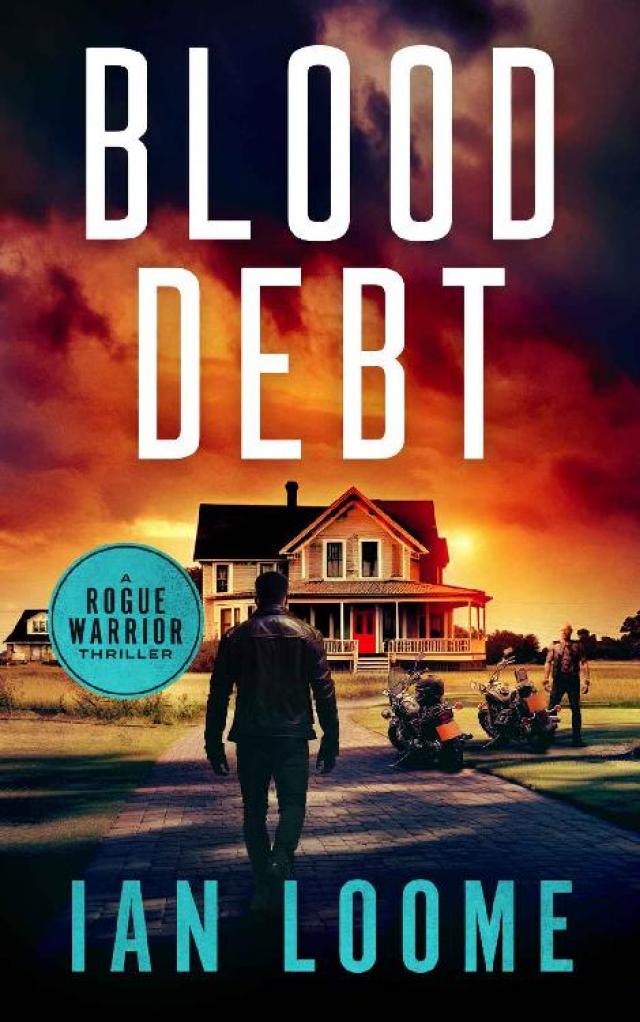


BLOOD DEBT
A ROGUE WARRIOR THRILLER
IAN LOOME
Published by Inkubator Books
www.inkubatorbooks.com
Copyright © 2023 by Ian Loome
Ian Loome has asserted his right to be identified as the author of this work.
ISBN (eBook): 978-1-83756-245-9
ISBN (Paperback): 978-1-83756-246-6
ISBN (Hardback): 978-1-83756-247-3
BLOOD DEBT is a work of fiction. People, places, events, and situations are the product of the author’s imagination. Any resemblance to actual persons, living or dead is entirely coincidental.
No part of this book may be reproduced, stored in any retrieval system, or transmitted by any means without the prior written permission of the publisher.
CONTENTS
Inkubator Books
Prologue
Chapter 1
Chapter 2
Chapter 3
Chapter 4
Chapter 5
Chapter 6
Chapter 7
Chapter 8
Chapter 9
Chapter 10
Chapter 11
Chapter 12
Chapter 13
Chapter 14
Chapter 15
Chapter 16
Chapter 17
Chapter 18
Chapter 19
Chapter 20
Chapter 21
Chapter 22
Chapter 23
Chapter 24
Chapter 25
Chapter 26
Chapter 27
Chapter 28
Chapter 29
Chapter 30
Chapter 31
Chapter 32
Chapter 33
Chapter 34
Chapter 35
Chapter 36
Chapter 37
Chapter 38
Chapter 39
Chapter 40
Chapter 41
Chapter 42
Chapter 43
Chapter 44
Chapter 45
Chapter 46
Chapter 47
Chapter 48
Chapter 49
Chapter 50
Chapter 51
Chapter 52
Chapter 53
Epilogue
Inkubator Newsletter
About the Author
Also by Ian Loome
JOIN THE INKUBATOR MAILING LIST
You will be the first to learn about new releases plus the many FREE and discounted Kindle books we offer!
bit.ly/3tpZe28
PROLOGUE
EVANSTON, INDIANA - AUGUST 14, 1991
The boy had been on the hunt for hours.
He pushed through the overgrowth gingerly, sometimes slowing to just inches at a time, pushing light branches aside, avoiding clumps of leaves and brush, steering clear of anything that might create noise.
Though he was just eleven, he was well practiced at bushcraft, at tracking and snaring small game. His father had taught him well.
But it was three in the afternoon, and the two had been stalking one another since just after eight that morning.
The woods near the family home were ideal, a few square miles of closely knit pine and elm trees, narrow passages through them perfect for ambushes, bushes and shrubs offering ground cover. Camouflage gear and rubber knives were the order of the day.
“Remember,” his father had told him over fried eggs and sausages for breakfast, “that your goal is to be as close as possible without being seen. If your prey is at a disadvantage and you can use the element of surprise, it’s a major strength.”
The boy had eaten his eggs and nodded. He was inquisitive and clever, with dark eyes that seemed to look through his subject. He didn’t always understand his father’s lessons, or their importance, at least. But he liked that, at least in this one area, the old man knew he existed.
His father would spend each week selling insurance – after a decade in the military – and then he’d spend the weekend teaching Bob how to shoot, how to build a shelter, how fend for himself if he ever had to survive in the wild.
Weeknights, they’d spar in the dojo his father had built behind the farmhouse. It was contact karate, but he knew the old man went easy on him.
But in the woods, the rule was simple: kill or be killed.
He checked the compass inset into the pommel of his knife. The sun streamed through the gaps in the sugar maple trees. By his reckoning, he’d looped around and was back close to where they’d entered the woods.
The wild was alive with strange sounds. Bird calls, mostly, but occasionally a shriek or chattering call, something bestial he couldn’t recognize. He paid close attention, checking tree tips to see if they’d been bent or broken, watching the dirt ahead for footprints or debris. The wind gusted, rustling choruses of leaves and intertwined branches.
Their first trip out there had come when he was seven years old. His father had given him his tent, his knife, a disposable lighter, some fishing line with a hook, and a can of beans for dinner. Then he told him he’d come back in the morning.
The sounds had terrified him, left him sobbing. He’d known there was nothing out there he couldn’t handle, short of running into a bear. But the dark crept in like a stranger, seeping into the surroundings of the campsite, swallowing up his ability to see the clearing, to judge it safe, enveloping him in unfamiliar territory, engulfing him in vulnerability.
The first time.
The second time, he’d known what to expect and had mustered the courage his father demanded of him. “Your grandfather didn’t die on the Normandy beaches defending this country so that you could grow up to be a coward,” he’d said on the second trip, this time leaving Bob with everything but the can of beans.
After he’d slammed the truck door behind him, his father said, “I’ll see you in two days.”
At first, he’d let the fear and self-pity take over again. But after about an hour, he’d set up camp and started making snares out of the fishing line and tree branches.
After finishing the snares, he’d gone fishing at the creek on the other side of the woods. He’d come back with lunch, an eight-pound pike that had had more bones than Bob had thought possible in a fish.
But it had also provided bait for the snares.
Proud of himself, he’d waited around the campfire well into the night, the stars and moon clear in the sky above his clearing.
When he’d checked the snares… they were all empty.
The second day had been harder. He’d been nervous all night. Despite the risk, he’d left the fire burning to ward off anything mean. Compromising, he’d created a rock wall around it, stacking them two deep to prevent sparks from kicking out.
By nighttime, the snares had still been empty. He’d run out of fish.
His sleeping bag had been warm enough, but the sounds of the woods had been frightening once again: padded footfalls close by that broke twigs and crushed leaves; hoots and hollers and the occasional howl; the gusting wind billowing the sides of the tent.
In the morning, he’d woken just after dawn and gone to check the snares.
He’d stood, mouth wide open in shock, staring at the baby deer as it lay bleeding to death.
The snare had caught its foreleg.
Unable to extract itself, it had attempted to chew through the line and only succeeded in making the wound much worse.
The dark-stained soil around it suggested it had been bleeding for quite some time.
He hadn’t known what to do. He’d been hunting with his father but hadn’t shot anything yet. He hadn’t had a gun, anyway, just his hunting knife. He wasn’t going to stab the poor creature to death. But he knew he couldn’t just leave it.
He’d tried to get close, to try to cut the line. But it had kicked and panicked, frothing at the mouth.
So instead, Bob retreated to the camp and waited for his father to arrive at nine o’clock. When he had, he’d showed him what had happened.
His father calmly walked back to his truck, found his rifle, and put the young deer out of its misery. The crack of the rifle had seemed different this time, and Bob had winced, as if taken back by its accusation.
“Now,” he’d said as he returned, rifle carried low in one hand, “you’re going to help me dress it.”
“Dress…?”
“That creature deserves a better purpose than dying in an accident. It has good meat on it, so we’re going to recover that meat. I’ll flip it onto its back and cut it open from its sternum to its stomach and remove its internal organs. Then you’ll skin it.”
“I’ll…” The boy felt numb. He’d barely been able to look at the animal when it was wounded. The idea of it lying there, splayed open…
He’d felt his stomach turn.
His father knelt down to his level. “Consequences, Bobby. It’s one thing to make a mistake. But it’s a worse sin to not own up and fix it.”
It seemed almost inconceivable that he’d remove an animal’s hide. “How do I…?”
“You start by slicing around its ankles, creating an initial separation point. Then you slice up the inside of each leg up to where my gutting incision begins. You repeat the process with a starting cut around the base of its neck, then its forelegs. I’ll show you how, so don’t worry. Then we peel off the skin like taking off clothing, basically.”
“And then we c
“No. Then I butcher the deer for its meat.” His father clapped him on the back. “Get comfortable. It’s going to be a while yet.”
The drive home had been mostly silent. Bob listened to the road noise, the woods flitting past the passenger window, the sun still low in the sky.
He’d felt lonely, isolated. He knew his father cared about him, but father was an adult, in a different world, grand and separate. His mother taught him his lessons; his father taught him how to survive. But sometimes, he’d see the other kids in the town near their rural home and wonder what it would be like to have them around.
“Pa… why don’t we have friends?” he’d asked.
Brian Singleton, Marine Sgt. Major retired, had looked over at his son and scowled. Then he’d returned his attention to the road.
Bob wasn’t sure why or where it came from, but he’d felt a stirring sense of resentment. It was the sense of being… dismissed. Sometimes, it felt like his father saw him as a tool, a means to an end. Or maybe a project.
His father broke the awkward silence. “You okay last night?”
“It was scary,” he’d said. “You didn’t leave me a rifle. You didn’t leave me a rifle, so I couldn’t protect myself, and I couldn’t kill the deer.”
His father had let that sit, as if concentrating on the empty ribbon of scarred asphalt ahead of them.
Eventually, the man said, “You know why I didn’t leave you a gun? Because I thought you’d just fish. That was my fault. Always consider the other options, the potential consequences. The smartest people you’ll ever meet can become dumb awful quick by jumping to conclusions, assuming they know better than someone with experience, or that it’s always better to wing it. Figure things out properly. Do research, read, practice… and always consider your options. I didn’t do that. I taught you to trap, and you just did what came naturally. But there are always consequences to actions we don’t consider. You have to try to see those things ahead of time if you want to make smart decisions. You hear me, boy?”
“Yes, Pa,” young Bob had offered as the truck bounced along the pockmarked road.
“I knew you’d be scared. That was the point. In life, we’re all scared sometimes. Overcoming that fear is the most important thing you can do, sometimes more important than the task or goal itself. Now, you know you can.”
Despite everything, that made Bob smile just a little. There was honesty in what his father was telling him: that he wanted him to survive, to make it.
To never be defeated by fear.
Now, four years later, he’d learned his lessons. And while he hadn’t found his father after five hours in the woods, the old man hadn’t caught him, either.
Ahead in a thicket, he heard a rustle. It was quick, but too heavy to be a rabbit or fox. He jogged over to the thicket in a crouch, trying to keep his footfalls short and silent.
Bob looked over the coarse thatch of bushes just in time to see an arm’s-length tree bough snap back into place.
I’m behind him.
I’m behind him, and for once, he didn’t spot me.
He felt a rush of energy, the thrill of the hunt, and of knowing it was almost his to win. He crept quickly past the spot. A makeshift trail led past more bushes, the lower strands broken by a weighty object passing.
He sneaked by them, then passed a large tree trunk. A small clearing was on the other side.
But his father was nowhere to be seen.
Bob took a step into the clearing… and the ground gave way, the thin layer of mulch and leaves covering the small pit collapsing under his weight. He plunged six feet to the bottom, landing on his backside.
He looked up.
“Remember what I told you when we drove out today?” his father asked, looking over the edge.
“The best fights are the ones you avoid having,” Bob muttered.
His father reached down into the hole and offered him a hand. Bob allowed himself to be pulled up over the lip. He got up and dusted himself off. “I almost had you, Pa.”
“I let you think you did, and you walked into a trap as a result. If it looks too easy, it is. Don’t be cocky! You spent five hours walking around in circles. I walked a hundred yards and dug a six-foot pit. You gave me a manner in which to avoid the fight completely by taking you out of the picture.”
They walked back to the truck. It was nearly four, both men hungry. “Can we try again tomorrow?” Bob asked.
“Nope, blowing up tree stumps tomorrow,” his father said. “But I’ll start teaching you how to use explosives carefully.”
“Really?” Bob exclaimed.
“Really. I’ll tell you something else, son: when you can’t avoid a problem? Sometimes it’s better to just blow that sucker up and start over.”
1
NEW ORLEANS
The Rev. Donald Green leaned forward, both fists resting on the table ahead of him. Taped to its front edge, a hand-drawn sign declared:
Community Garage Sale for Charity.
His expression appeared anything but charitable.
His niece, Denise, tugged on the edge of his blue jeans. A lithe young woman in her early twenties, she was seated behind the table, looking worried. She followed his line of sight across the road.
The front yard of an old A-frame house was busy, a handful of burly men enjoying a party, hazy smoke rising off the barbecue, the half-sized hedge not enough to cut off their view.
They were loud, blasting rock music, beer bottles everywhere. Each of the men wore a leather rocker vest featuring a head-sized patch on the back. It was a skull, a dagger protruding downwards through one eye socket, a snake slithering out of the other. Stitched letters above it read “The Damned M.C.,” while those below it read “New Orleans.”
A row of motorcycles was parked at the curb: Harleys and choppers, teardrop gas tanks emblazoned with flames and skulls, high-backed seats, struts stretching out as if chewing up the road ahead.
“Uncle, please… they’re going to see you staring.” Denise worried.
“They see the collar, but they don’t respect it,” Rev. Green declared. “They know they’re scaring folks off, but they don’t care. They don’t care that this street is mostly older folks, just trying to hang onto their homes. They sure don’t care that this money could help Mrs. Jessup save her house from the bank.”
He raised his voice so that he could be heard across the street. He was happy Denise had driven up from the Ninth Ward to help her family out, but upset she was being subjected to the display. “I suspect they don’t give a damn about anything but themselves.”
“They probably wouldn’t worry much about laying a beating on you, neither,” Denise suggested. “Please, Uncle… sit down before you rile them up any more.”
“I ain’t afraid of those punks,” the aging pastor said. “I survived two tours in the Vietnam jungle being stalked by the Cong, I would have you know. Compared to that, these dudes ain’t nothing.” He raised his voice again. “You hear that, you no-good troublemakers!”
If they did, the bikers did not care to respond. They continued laughing. One crushed a beer can and tossed it at his friend’s head.