Otherwise

Otherwise

Farley Mowat

Outdoors & Nature / History / Biographies & Memoirs

A Canadian icon gives us his final book, a memoir of the events that shaped this beloved writer and activist. Farley Mowat has been beguiling readers for fifty years now, creating a body of writing that has thrilled two generations, selling literally millions of copies in the process. In looking back over his accomplishments, we are reminded of his groundbreaking work: He single-handedly began the rehabilitation of the wolf with Never Cry Wolf. He was the first to bring advocacy activism on behalf of the Inuit and their northern lands with People of the Deer and The Desperate People. And his was the first populist voice raised in defense of the environment and of the creatures with whom we share our world, the ones he has always called The Others. Otherwise is a memoir of the years between 1937 and the autumn of 1948 that tells the story of the events that forged the writer and activist. His was an innocent childhood, spent free of normal strictures, and largely in the company of an assortment of dogs, owls, squirrels, snakes, rabbits, and other wildlife. From this, he was catapulted into wartime service, as anxious as any other young man of his generation to get to Europe and the fighting. The carnage of the Italian campaign shattered his faith in humanity forever, and he returned home unable and unwilling to fit into post-war Canadian life. Desperate, he accepted a stint on a scientific collecting expedition to the Barrengrounds. There in the bleak but beautiful landscape he finds his purpose — first with the wolves and then with the indomitable but desperately starving Ihalmiut. Out of these experiences come his first pitched battles with an ignorant and uncaring federal bureaucracy as he tries to get aid for the famine-stricken Inuit. And out of these experiences, too, come his first books. Otherwise goes to the heart of who and what Farley Mowat is, a wondrous final achievement from a true titan.
Read online
  • 605
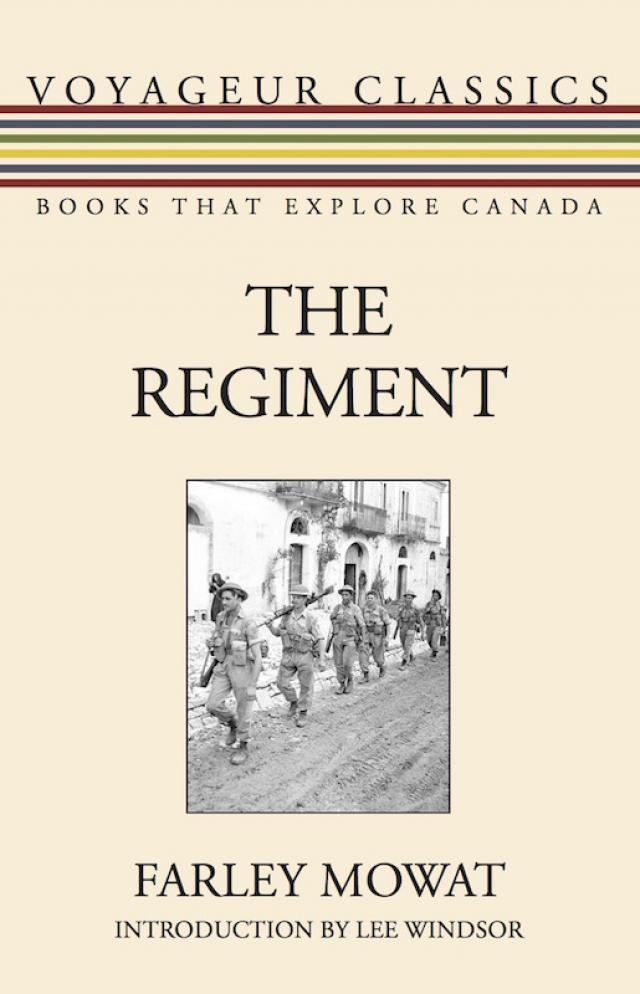
The Regiment

The Regiment

Farley Mowat

Outdoors & Nature / History / Biographies & Memoirs

The story of an astonishing band of Canadian soldiers and their part in the Allied victory in Italy.The Hastings and Prince Edward Regiment (the Hasty Ps) was Canada's most decorated regiment in the Second World War, winning thirty-one battle honours. Famed for their role in the Allied invasion of Sicily and the conquest of Italy, for six years the members of the regiment suffered brutal conditions, fighting bravely in the face of fierce opposition from the enemy, and ultimately triumphing.In The Regiment (originally published in 1955), Farley Mowat, famed Canadian fiction writer and regiment member, tells the story of the Hasty Ps, from their recruitment in September 1939 until the end of the war. Mowat was a second lieutenant and platoon leader with the regiment, and writes movingly of the great suffering his fellow soldiers endured, their bravery in battle, and the lasting friendships he forged as a member of the group.
Read online
  • 489
Lost in the Barrens

Lost in the Barrens

Farley Mowat

Outdoors & Nature / History / Biographies & Memoirs

Awasin, a Cree Indian boy, and Jamie, a Canadian orphan living with his uncle, the trapper Angus Macnair, are enchanted by the magic of the great Arctic wastes. They set out on an adventure that proves longer and more dangerous than they could have imagined. Drawing on his knowledge of the ways of the wilderness and the implacable northern elements, Farley Mowat has created a memorable tale of daring and adventure. When first published in 1956, Lost in the Barrens won the Governor-General’s Award for Juvenile Literature, the Book-of-the-Year Medal of the Canadian Association of Children’s Librarians and the Boys’ Club of America Junior Book Award. From the Trade Paperback edition.
Read online
  • 229
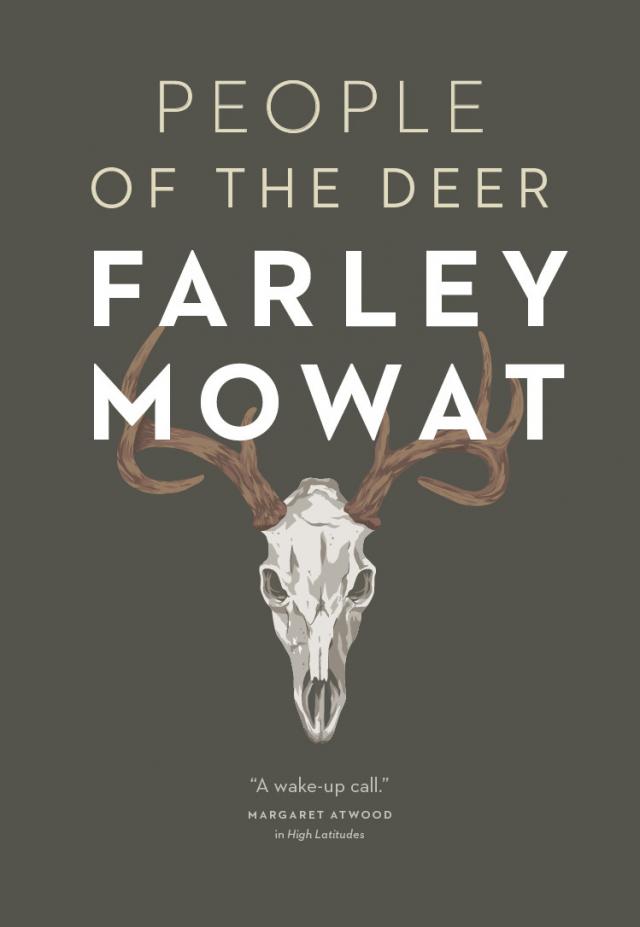
People of the Deer

People of the Deer

Farley Mowat

Outdoors & Nature / History / Biographies & Memoirs

In 1886, the Ihalmiut people of northern Canada numbered seven thousand; by 1946, when Farley Mowat began his two-year stay in the Arctic, the population had fallen to just forty. With them, he observed for the first time the phenomenon that would inspire him for the rest of his life: the millennia-old migration of the Arctic's caribou herds. He also endured bleak, interminable winters, suffered agonizing shortages of food, and witnessed the continual, devastating intrusions of outsiders bent on exploitation. Here, in this classic and first book to demonstrate the mammoth literary talent that would produce some of the most memorable books of the next half-century, best-selling author Farley Mowat chronicles his harrowing experiences. People of the Deer is the lyrical ethnography of a beautiful and endangered society. It is a mournful reproach to those who would manipulate and destroy indigenous cultures throughout the world. Most of all, it is a tribute to the last People of the Deer, the diminished Ihalmiuts, whose calamitous encounter with our civilization resulted in their unnecessary demise.
Read online
  • 227
Eastern Passage

Eastern Passage

Farley Mowat

Outdoors & Nature / History / Biographies & Memoirs

Review"For admirers of Farley Mowat -- and we are legion -- this is a necessary work." — *Globe and Mail"An insightful narrative that elucidates Mowat's past." — Quill and Quire"[Mowat's] celebrated style is in evidence from page one." — Canadian Geographic"Thoreau-esque at times. . . . The prose is effortless and entertaining." — Telegraph-Journal*From the Trade Paperback edition.Product DescriptionFollowing Farley Mowat’s bestselling memoir, Otherwise, the literary lion returns with an unexpected triumphEastern Passage is a new and captivating piece of the puzzle of Farley Mowat’s life: the years from his return from the north in the late 1940s to his discovery of Newfoundland and his love affair with the sea in the 1950s. This was a time in which he wrote his first books and weathered his first storms of controversy, a time when he was discovering himself through experiences that, as he writes, "go to the heart of who and what I was" during his formative years as a writer and activist.In the 1950s, with his career taking off but his first marriage troubled, Farley Mowat buys a piece of land northwest of Toronto and attempts to settle down. His accounts of building his home are by turns hilarious and affecting, while the insights into his early work and his relationship with his publishers offer a rare glimpse into the inner workings of a writer’s career.But in the end, his restless soul could not be pinned to one place, and when his father offered him a chance to sail down the St. Lawrence, he jumped at it, not realizing that his journey would bring him face to face with one of Canada’s more shocking secrets – one most of us still don’t know today. This horrific incident, recalling as it did the lingering aftermath of war, and from which it took the area decades to recover, would forge the final tempering of Mowat as the activist we know today.Farley Mowat grows wiser and more courageous with each passing year, and Eastern Passage is a funny, astute, and moving book that reveals that there is more yet to this fascinating and beloved figure than we think we know.From the Hardcover edition.
Read online
  • 66
Sibir

Sibir

Farley Mowat

Outdoors & Nature / History / Biographies & Memoirs

Here is a Siberia unheard of in the West. Once the most remote place of exile in all of Russia, Mowat describes it as a burgeoning land of opportunity and growth. Granted extraordinary freedom to visit places rarely seen by any westerner since 1917, Farley Mowat and his wife, Claire, travelled more than 29,000 miles over mountains, steppes, taiga and tundra to meet the people who have chosen to make Siberia their home and livelihood. With his classic exuberance and wit, Mowat brings to life a place and a people who share the top of the world with us -- their hopes and aspirations, their humour, and their dedication to the dramatic awakening of Sibir, the Sleeping land.From the Hardcover edition.
Read online
  • 65
A Whale For The Killing (v5.0)

A Whale For The Killing (v5.0)

Farley Mowat

Outdoors & Nature / History / Biographies & Memoirs

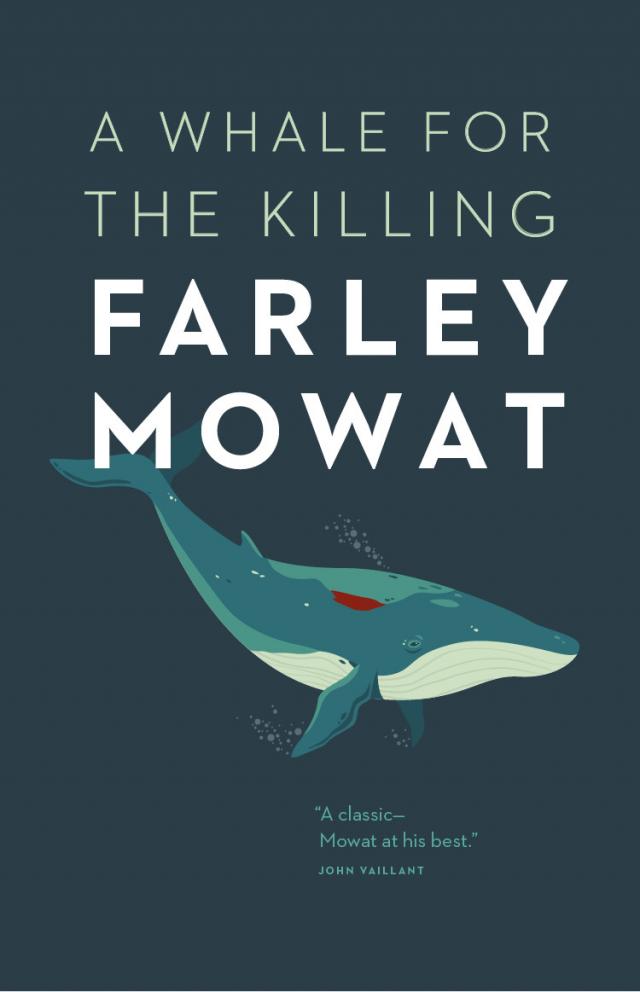
Book DescriptionWhen an 80-ton fin whale became trapped in a lagoon near his Newfoundland home, Farley Mowat rejoiced at the unique chance to observe one of the world's most magnificent creatures up close. But some of his neighbors saw a different opportunity altogether: in a prolonged fit of violence, they blasted the whale with rifle fire, and scarred its back with motorboat propellers. Mowat appealed desperately to the police, to marine biologists, finally to the press. But it was too late. Mowat's poignant and compelling story is an eloquent argument for the end of the whale hunt, and the rediscovery of the empathy that makes us human.About The AuthorFarley Mowat was born in Belleville, Ontario, in 1921. He began writing upon his return from serving in World War II, and has since written 44 books. He spent much of his youth in Saskatoon, and has lived in Ontario, Cape Breton and Newfoundland, while travelling frequently to Canada's far north. Throughout, Mowat has remained a determined environmentalist, despairing at the ceaseless work of human cruelty. Yet his ability to capture the tragic comedy of human life on earth has made him a national treasure in Canada, and a beloved storyteller to readers around the world. His internationally celebrated books include People of the Deer, The Dog Who Wouldn't Be, Sea of Slaughter, and The Boat Who Wouldn't Float.
Read online
  • 40
The Farfarers

The Farfarers

Farley Mowat

Outdoors & Nature / History / Biographies & Memoirs

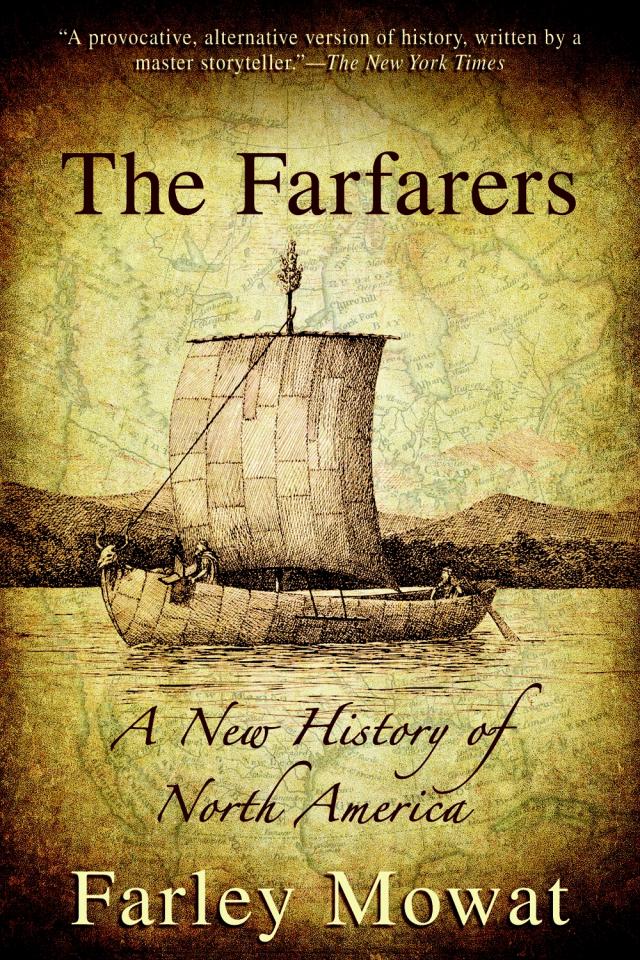
In this bestseller, Farley Mowat challenges the conventional notion that the Vikings were the first Europeans to reach North America, offering an unforgettable portrait of the Albans, a race originating from the island now known as Britain. Battered by repeated invasions from their aggressive neighbors—Celt, Roman, and Norse—the Albans fled west. Their search for safety, and for the massive walrus herds on which their survival depended, eventually took them to the land now known as Newfoundland and Labrador. Skillfully weaving together clues gathered from forty years of research, Mowat presents a fascinating account of a forgotten history.
Read online
  • 34
Bay of Spirits

Bay of Spirits

Farley Mowat

Outdoors & Nature / History / Biographies & Memoirs

In 1957, Farley Mowat shipped out aboard one of Newfoundland’s famous coastal steamers, tramping from outport to outport along the southwest coast. The indomitable spirit of the people and the bleak beauty of the landscape would lure him back again and again over the years. In the process of falling in love with a people and a place, Mowat also met the woman who would be the great love of his life. A stunningly beautiful and talented young artist, Claire Wheeler insouciantly climbed aboard Farley’s beloved but jinxed schooner as it lay on the St. Pierre docks, once again in a cradle for repairs, and changed both their lives forever. This is the story of that love affair, of summers spent sailing the Newfoundland coast, and of their decision to start their life together in Burgeo, one of the province’s last remaining outports. It is also an unforgettable portrait of the last of the outport people and a way of life that had survived for centuries but was now passing forever. Affectionate, unsentimental, this is a burnished gem from an undiminished talent.*I was inside my vessel painting the cabin when I heard the sounds of a scuffle nearby. I poked my head out the companionway in time to see a lithesome young woman swarming up the ladder which leaned against Happy Adventure’s flank. Whining expectantly, the shipyard dog was endeavouring to follow this attractive stranger. I could see why. As slim and graceful as a ballet dancer (which, I would later learn, was one of her avocations), she appeared to be wearing a gleaming golden helmet (her own smoothly bobbed head of hair) and was as radiantly lovely as any Saxon goddess. I invited her aboard, while pushing the dog down the ladder.“That’s only Blanche,” I reassured my visitor. “He won’t bite. He’s just, uh . . . being friendly.”“That’s nice to know,” she said sweetly. Then she smiled . . . and I was lost.*–From Bay of SpiritsFrom the Hardcover edition.From Publishers WeeklyIn this ruminative memoir, Mowat chronicles the disappearance of a way of life in Newfoundland and the chance encounter that brought him the love of his life. As a young writer in 1957, Mowat decided to travel on a tramp steamer among the small fishing villages known as outports that dotted the Newfoundland coast. These outports were the home of hardy and colorful fisherfolk of Basque, English, Irish and French descent. Government policy and the depletion of the regional fisheries by huge commercial trawlers were slowly forcing the locals out of their centuries-old homes. Mowat enjoyed the area so much that he bought a schooner for further exploration. Soon afterward, a young woman fleeing the overeager attentions of an amorous mutt stumbled on board his ship and romance quickly followed. Mowat and Claire Wheeler spent the next decade sailing in the rocky bays, thick fogs and sudden squalls of the region. The author of 40 books, mostly on nautical and adventure themes, Mowat has a deep understanding of the sea and the natural world. His observations of the outporters are equally perceptive and provide a fascinating window into a little known corner of North America. In this tender elegy to a lost Newfoundland, Mowat shows an amused tolerance for almost everything except the human greed that has inexorably destroyed his adopted home's cultures and environment. (May) Copyright © Reed Business Information, a division of Reed Elsevier Inc. All rights reserved. From BooklistCanada's most idiosyncratic province is as large a presence as Canada's most idiosyncratic writer in this moving memoir of the love of a woman and the love of a particular place. In 1957, Mowat boarded a steamer that plied Newfoundland's rugged coastline. It was love at first sight, and Mowat would revisit often until he bought his Happy Schooner. On one Newfoundland nautical adventure he met Claire Wheeler. He was married to another then and had two small children. Never trying to justify his behavior, Mowat presents how he transferred his affections and his domicile matter-of-factly. The emotional heart of the story lies in remote Burgeo, Newfoundland, where he and Claire settled. The book concludes bittersweetly when the killing of a trapped whale nearly becomes an international incident with Mowat in the thick of it. Mowat has visited whale killing before (A Whale for the Killing, 1972) but here offers a more personal perspective. In Newfoundland, he realized that, no matter how he loved this orneriest of provinces, he would forever remain a stranger. June SawyersCopyright © American Library Association. All rights reserved
Read online
  • 29
Born Naked

Born Naked

Farley Mowat

Outdoors & Nature / History / Biographies & Memoirs

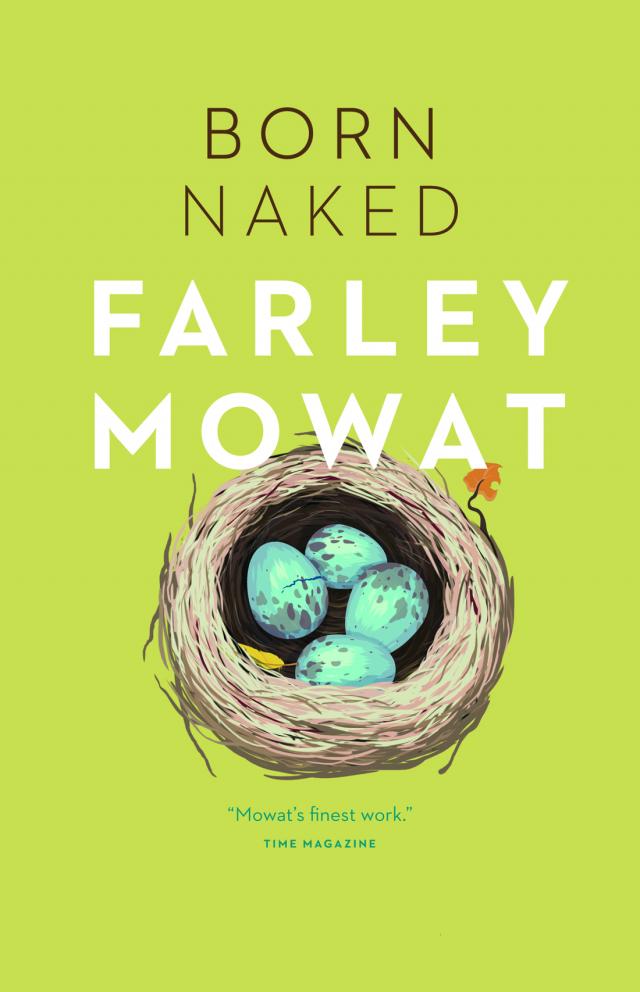
Farley Mowat's outrageous memoir begins with his unlikely conception in a canoe and continues to his boyhood fascination with creatures of the natural world and on to his youthful rambles and adventures. To his immense pleasure and his parents' dismay, he adopted various beasts (whom he affectionately calls "The Others") as roomates. In this boyhood memoir, he recounts the exploits of this second family, who have been the subjects of many of his beloved books for young readers. This is the tale of a mischievous, immensely gifted young naturalist, recounted with the wisdom, humour and grown-up perspective of a very talented writer.
Read online
  • 25
And No Birds Sang (v5.0)

And No Birds Sang (v5.0)

Farley Mowat

Outdoors & Nature / History / Biographies & Memoirs

Book DescriptionIn July 1942, Farley Mowat was an eager young infantryman bound for Europe and impatient for combat. This powerful, true account of the action he saw, fighting desperately to push the Nazis out of Italy, evokes the terrible reality of war with an honesty and clarity fiction can only imitate. In scene after unforgettable scene, he describes the agony and antic humor of the soldier's existence: the tedium of camp life, the savagery of the front, and the camaraderie shared by those who have been bloodied in battle.Kirkus ReviewThere is a deceptive quiet to the beginning of this recollection by Farley Mowat of the hell he and his comrades endured in the bloody Sicilian and Italian campaigns of World War II. And the undersized, baby-faced young man the author was three decades ago, eager to "get a damn good lick in at the Hun," seems, in the first few pages, unendurably callow, striking attitudes as false and dated as his slang. But he grows up fast and the battles he survived as a second lieutenant in the Canadian infantry are clamorously, jarringly real - justifying epigraphs from Robert Graves, Wilfred Owen, Edmund Blunden. In 1940 at age 19 Mowat joined his father's old outfit, the Hastings and Prince Edward Regiment, known as the Hasty Pees and made up of men from southeastern Ontario. A bird-watcher and something of a loner, he ends up in command of a platoon of hard cases and misfits, a iamb among lions. They were thrown into the invasion of Sicily in July of 1943 and Mowat soon loses the illusion that war is little more than an exciting form of battle game. "For the first time," he writes laconically, "I truly understood that the dead were dead." Then, as the Canadians are put through the meat grinder attempting to storm a German mountain-top fortress, he comes to know an unshakable fear; each time he finds it a little harder to blind himself to the death or mutilation he is certain awaits him. Mowat not only gets his emotional responses right, but he also makes the actual battle operations intelligible. A memorable book from a practiced hand.From The Back CoverOn September 2, 1939, Farley Mowat was painting the porch of his family’s home when his ebullient father drove into the driveway and shouted, “Farley, my lad, there’s big bloody news! The war is on!” Eighteen-year-old Farley responded with glee, but four years later, pinned down in the wintry mud of Italy, he saw a soldier “humping jerily away from his own leg, which had been severed at the thigh. In the instant I saw him, he gave one final bubbling shriek, collapsed and mercifully was still.” And No Birds Sang is Mowat’s gripping account of how a young man excited by the prospect of battle, is transformed into a war-weary veteran.
Read online
  • 11
183